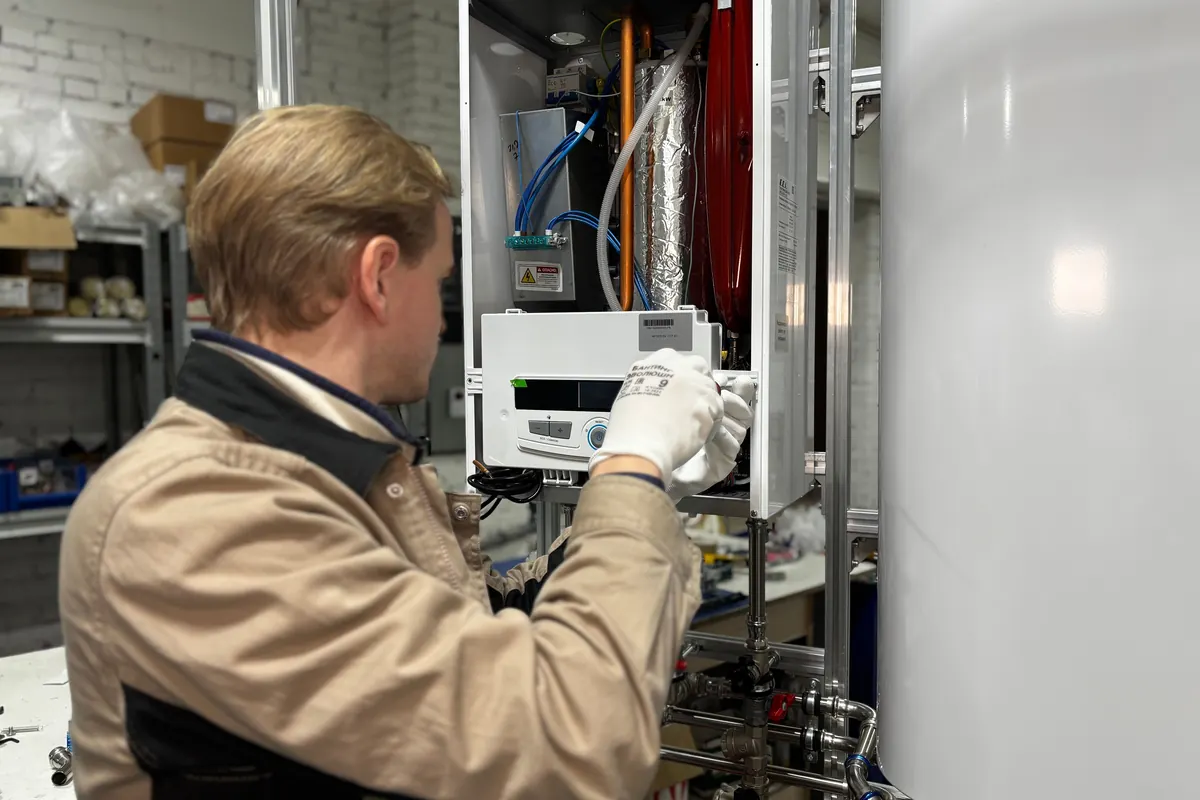
Boiler Replacement Cost in 2026: Gas, Oil & Combi
A boiler heats your home by circulating hot water (or steam) through radiators, baseboards, or radiant floors — and when one fails in January, replacement can’t wait. A new boiler typically costs $4,500–$10,500 installed in the US in 2026. This Old House puts most replacements at $4,500–$10,000; Modernize’s survey centres higher, at $6,500–$11,500. Gas is…
A boiler heats your home by circulating hot water (or steam) through radiators, baseboards, or radiant floors — and when one fails in January, replacement can’t wait. A new boiler typically costs $4,500–$10,500 installed in the US in 2026. This Old House puts most replacements at $4,500–$10,000; Modernize’s survey centres higher, at $6,500–$11,500. Gas is the most common fuel, oil dominates in the Northeast, and combi boilers are the fastest-growing option for smaller homes.
Quick answer
- Typical range: $4,500–$10,500 installed (US, 2026)
- What’s included: boiler unit, removal of the old boiler, standard venting and condensate hookup, permits, and commissioning
- Canada: CAD $7,000–$15,000 installed for a condensing boiler in Greater Vancouver (BC Wide); Toronto-area installs from CAD $9,473 (Bison Air)
- US national ranges · Updated October 2026
Quick Answer: Boiler Replacement Costs by Fuel Type
| Boiler type | Typical installed cost (US, 2026) |
|---|---|
| Gas, standard efficiency (80–85% AFUE) | $4,000–$7,000 |
| Gas, high efficiency / condensing (90–96% AFUE) | $6,000–$10,500 |
| Oil, standard efficiency | $3,300–$7,200 |
| Oil, high efficiency | $6,300–$9,000 |
| Combi (gas, heat + hot water) | $7,500–$12,000 |
| Steam (gas or oil, older radiator homes) | $7,000–$12,500 |
| Electric | $1,800–$8,000 |
HomeGuide puts a straightforward gas replacement at $4,000–$9,000 installed (unit alone: $1,400–$5,600); Angi’s 2026 national average is about $5,910. Like-for-like swaps sit at the bottom of these ranges; condensing conversions with new venting sit at the top. (AFUE = Annual Fuel Utilization Efficiency — the share of fuel that becomes usable heat.)
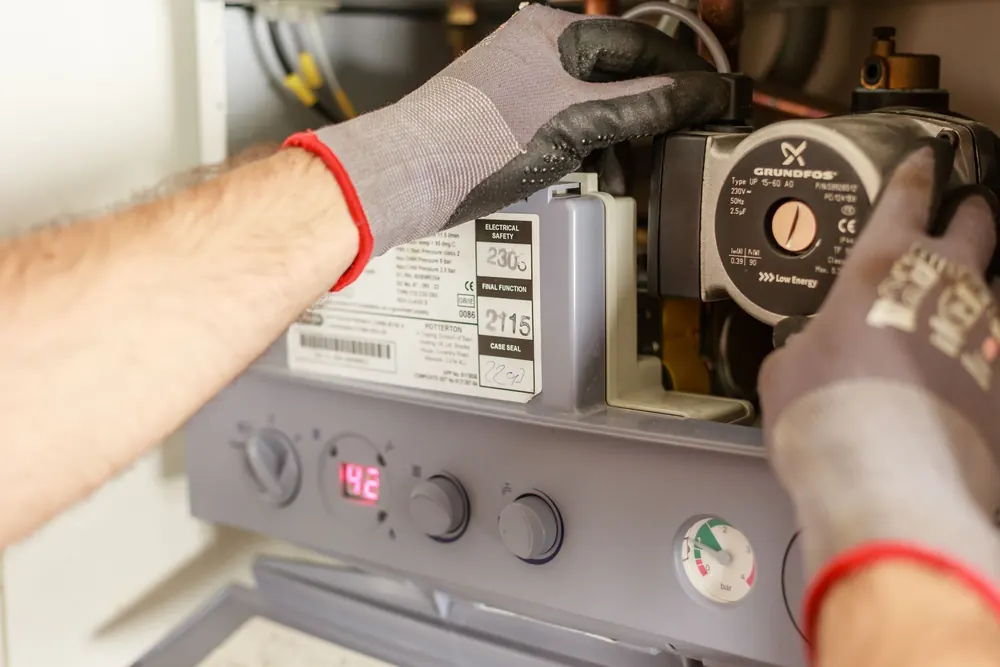
Combi vs Heat-Only: The Short Version
The biggest choice isn’t the brand — it’s the configuration. A heat-only boiler ($4,000–$10,500, gas) heats water for radiators, baseboards, or floors while a separate tank handles showers and taps — best for larger homes with 3+ bathrooms, though it’s two appliances to maintain and eventually replace. A combi boiler ($7,500–$12,000, gas) does both jobs in one wall-mounted unit, heating water on demand with no tank — best for small-to-mid homes with 1–2 bathrooms; flow drops when several taps run together, and it needs adequate gas-line size and water flow.
Gas vs oil is usually decided by what’s on your street: where a gas line exists, gas costs less to run and needs less maintenance. Oil remains common in the rural Northeast, but budget for extras — an oil tank replacement alone runs $1,000–$6,200, plus annual burner servicing. Either way, get the boiler sized from a heat-loss calculation, not by copying the old unit’s nameplate, which was often oversized to begin with.
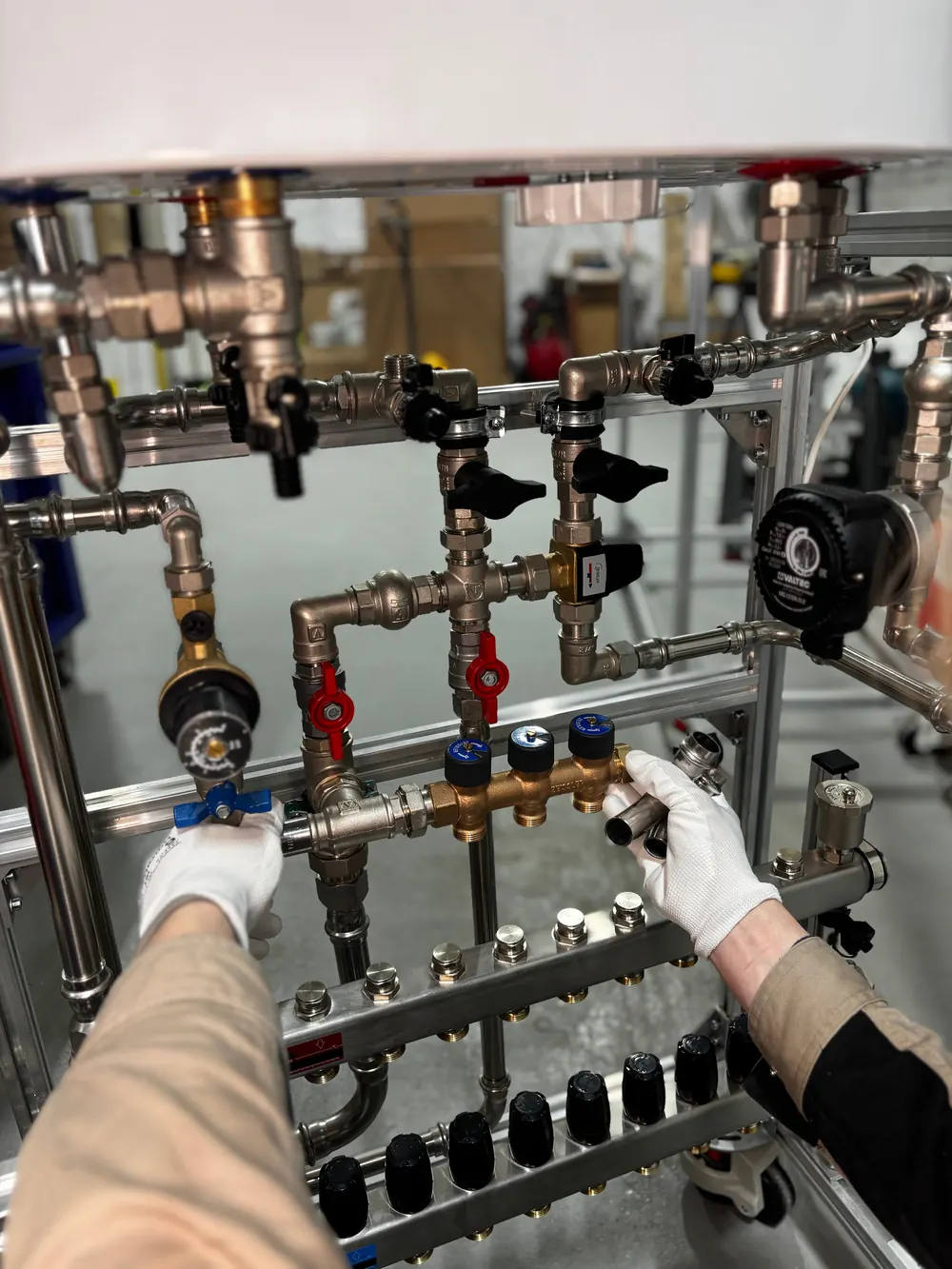
Where Your Money Goes
- Equipment (roughly 40–55% of the total). The boiler itself — HomeGuide lists gas units at $1,400–$5,600 and oil units at $1,700–$6,500 before installation; condensing models sit at the top.
- Labour (roughly 30–45%). Removal and disposal of the old unit, piping, venting, fuel-line connection, condensate routing, wiring, system flushing, and commissioning — get each line in writing.
- Extras and code work (the rest — the usual surprise). Permits and inspection, a condensate pump or neutralizer, an enlarged gas line, expansion tank, a power flush, chimney liner work.
6 Factors That Change Your Price
- Fuel and efficiency tier. Each AFUE step costs more upfront, less monthly; a standard swap to a condensing combi can double the equipment line.
- Like-for-like vs conversion. Reusing sound piping, venting, and controls keeps you near the bottom; changing fuel or location rewrites the job.
- Condition of the existing system. Sludge, corroded piping, and failing valves surface during replacement; a flush is cheap insurance for a new heat exchanger.
- Venting and condensate. Condensing boilers need new PVC venting and a condensate drain (plus a neutralizer in many areas).
- Home size and zoning. More square footage means more BTU; extra zones and radiant floors add pumps, valves, and controls.
- Permits, code, and region. A permit and inspection are required everywhere; Northeast and metro labour runs high, and winter emergencies carry a premium.
Repair vs Replace: Quick Rules
Boilers are long-lived — 15 years is a floor, and cast-iron units often run 20–30 years — so “old” alone isn’t a verdict:
- The 50% rule: if a repair quote exceeds 50% of replacement cost on a boiler over 15 years old, replace. (See our furnace repair cost guide for how repair quotes are structured.)
- The age × repair rule: multiply the boiler’s age by the repair cost; if the result tops roughly $5,000, replacement usually wins.
- Safety overrides math: a cracked heat exchanger or carbon-monoxide concern means replacement now, not at the next budget review.
Permits and safety: this work involves gas or oil combustion, pressurised hot water, and venting — it requires a permit and inspection in the US, and licensed gas fitters in Canada. It is licensed-trade work, not a DIY project; this guide is cost information only.
How to Save — and an Incentives Warning for 2026
First, a warning: the federal Section 25C credit — up to $600 toward a qualifying high-efficiency boiler — ended for equipment placed in service after December 31, 2025. Several top-ranking guides still describe it as claimable on a 2026 install; per the IRS, it is not. If a quote leans on a “federal tax credit” this year, ask them to show you the current IRS page.
What replaced it is state and utility rebates, often instant discounts via participating contractors:
- Peoples Gas (Chicago): $350 for a 95% hot water boiler, $300 at 90%, and $400–$500 for a boiler with integrated domestic hot water.
- Nicor Gas (Illinois): similar rebates for qualifying high-efficiency boilers installed in 2026; apply within 90 days of installation.
Beyond rebates: replace on your schedule, not the boiler’s (a planned spring/summer job avoids the emergency premium); keep the distribution system (sound radiators, baseboards, and piping are an asset — spend on the flush instead); and right-size (a heat-loss calculation prevents paying for capacity you’ll never use). Finally, compare the alternative: with ducts (or cooling planned), price a heat pump against the boiler quote — see our heat pump installation cost guide; for the forced-air side, see our furnace replacement cost guide.
Boiler Costs in Canada
Canadian pricing runs on its own market — CAD figures as published by Canadian sources, never converted from US prices.
- Greater Vancouver (BC Wide Heating, 2026): a condensing gas boiler runs CAD $7,000–$15,000 installed; combi boilers CAD $8,000–$14,000 and up; system boilers CAD $9,000–$16,000.
- Toronto / GTA (Bison Air): an NTI FTVN Series II condensing boiler (up to 96% AFUE) is listed from CAD $9,473 installed, including TSSA-certified installation and a 1-year labour warranty.
- Ontario (Enercare): a new high-efficiency gas or propane boiler starts at CAD $11,750, including standard installation and a one-year warranty.
BC homeowners may find CleanBC and BC Hydro support on eligible upgrades — boiler eligibility is narrower than heat-pump eligibility and changes often, so confirm on the official program page.
Worked Example: A Mid-Range Boiler Swap at $7,500
Say you choose a gas condensing boiler and the quotes cluster near the middle of this guide’s typical range — ($4,500 + $10,500) ÷ 2 = $7,500. Split that $7,500 using the shares from “Where Your Money Goes” above:
- Equipment (40–55% of $7,500): $3,000–$4,125
- Labour (30–45% of $7,500): $2,250–$3,375
- Extras and code work (the rest): $0–$2,250, depending on where equipment and labour land inside their bands
- In Chicago, a Peoples Gas rebate on a 95% AFUE boiler takes $350 off: $7,500 − $350 = $7,150
Use the same split to sanity-check any real quote: if a bidder’s equipment line sits far above 55% of their total, or the extras line keeps growing, ask them to walk you through each line in writing — as the section above recommends.
Red Flags in a Boiler Quote
- Sized off the old nameplate. The new boiler simply copies the old unit’s rating — no heat-loss calculation — even though older boilers were routinely oversized.
- A dead tax credit in the quote. The price leans on the federal Section 25C credit, which ended for equipment placed in service after December 31, 2025.
- Condensing conversion, no condensate plan. A high-efficiency swap quoted with no mention of new venting, a condensate drain or a neutralizer.
- Permit and inspection absent. Gas or oil combustion work quoted with neither — both are required.
- Nothing in writing. Removal, flushing and commissioning bundled into one vague line instead of itemized costs.
Questions to Ask Before You Hire
- Will you size the new boiler from a heat-loss calculation?
- Are removal and disposal of the old boiler included in this price?
- Does the price include new venting and condensate handling for a condensing model?
- Which state or utility rebates does this quote assume — and who applies for them?
- Are the permit and inspection included, and who schedules them?
How Boiler Costs Vary by Region
Boilers are a regional technology, so prices cluster where boilers cluster. Oil dominates in the Northeast, where — as the factors above note — Northeast and metro labour runs high, and quotes sit toward the top of the national ranges; gas country generally pays less for the same class of work. Canada is its own market with its own figures, never conversions: a condensing boiler in Greater Vancouver runs CAD $7,000–$15,000 installed (see the Canada section above). And everywhere boilers are common, a mid-winter emergency replacement carries a premium a planned spring swap avoids.
How long does a boiler last?
Plan on 15–25 years. Cast-iron boilers with annual servicing frequently pass 25; wall-hung condensing and combi units trend closer to 15–20, depending on water quality and system flushing at install.
Is a combi boiler worth it?
Usually yes for a small-to-mid home with 1–2 bathrooms and an aging water heater: one appliance, no tank standby losses, freed-up space. Large homes with simultaneous showers do better with heat-only plus an indirect tank. The combi premium ($7,500–$12,000 installed) is partly offset by not replacing a separate water heater.
What size boiler do I need?
One sized by a heat-loss calculation (Manual J or the Canadian equivalent), not the old boiler’s label — older boilers were routinely oversized, and right-sized modulating units run longer, quieter cycles.
Can I switch from oil to gas, or from a boiler to a furnace?
Yes, but both are conversions, not replacements, and priced accordingly — gas adds line work and re-fitting, and forced air means new ductwork throughout the home. Most owners come out ahead replacing in kind.
Sources + How We Built This Range
Compiled October 2026 from published contractor pricing and cost surveys, cross-checked across sources: This Old House ($4,500–$10,000+ installed), Modernize, HomeGuide, Angi 2026 data (national average ≈ $5,910), the IRS FAQ on energy credits and IRS Fact Sheet 2025-05 (Section 25C terminated for property placed in service after Dec 31, 2025), Peoples Gas 2026 equipment rebates, BC Wide Heating, Bison Air, and Enercare. For how we research, verify, and update every number on this site, see our methodology.
HomeFixPrices Team — HomeFixPrices researches what home repairs and replacements actually cost across the US and Canada, using contractor pricing data, manufacturer information, and published cost surveys — then shows the sources so you can check the numbers yourself. No sponsored rankings, no invented figures: just researched ranges, updated through the year.
Prices are typical US and Canadian ranges from the sources above, October 2026. Boiler work involves gas/oil combustion and pressurised hot water — always use a licensed heating contractor, confirm permits, and get local written quotes before committing.